
From Team to Portfolio: Understanding SAFe®'s Four Levels with Agile Hive
The Scaled Agile Framework (SAFe®) is a proven system for scaling Agile across large organizations. While Agile works well for individual teams, SAFe® provides the structure needed to align multiple teams, departments, and even portfolios to deliver consistent value.
For those new to SAFe®, understanding its four levels—Team, Agile Release Train (ART) or Program, Large Solution, and Portfolio—is essential.
Let’s explore each level and how Agile Hive, a powerful “SAFe® in Jira” solution built on Atlassian tools, helps bring each one to life.
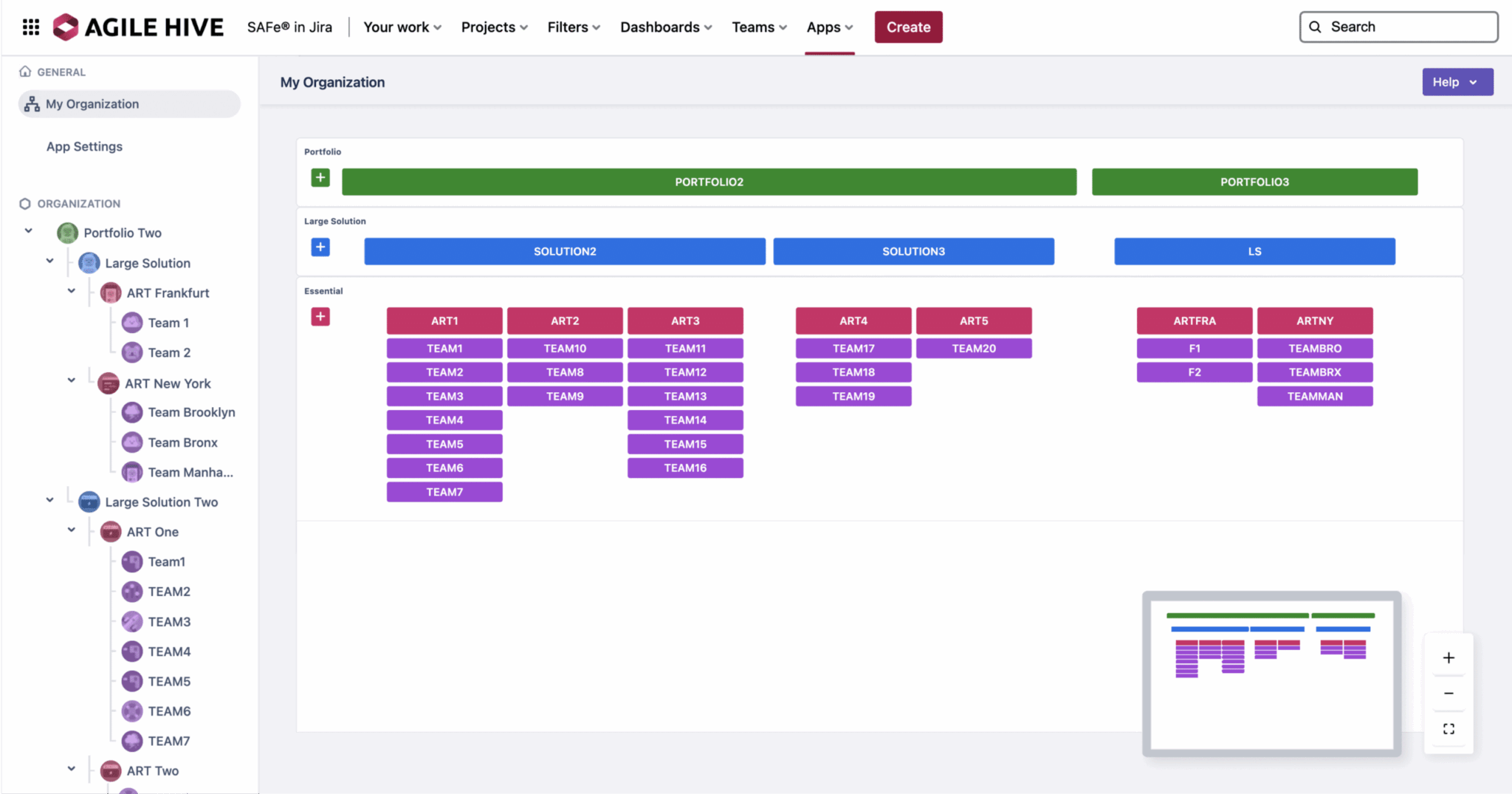
Team Level: Where Agile Work Gets Done
At the foundation of SAFe® are Agile teams. These are cross-functional groups—typically 5–11 people—who use Scrum, Kanban, or a hybrid approach to deliver valuable increments of work within short time frames (usually 2-week iterations).
What Happens Here
- Daily standups
- Sprint planning and execution
- Backlog refinement
- Demos and retrospectives
How Agile Hive Helps
Agile Hive provides preconfigured Jira workflows tailored to Agile teams working within SAFe®. It simplifies sprint management with:
- Visual task boards
- Automated burndown charts
- Clear links between team-level stories and higher-level features
Example: A Scrum team working on a new mobile app feature can easily manage their sprint tasks in Jira, while Agile Hive automatically syncs their work to the program level, so nothing is lost in translation.
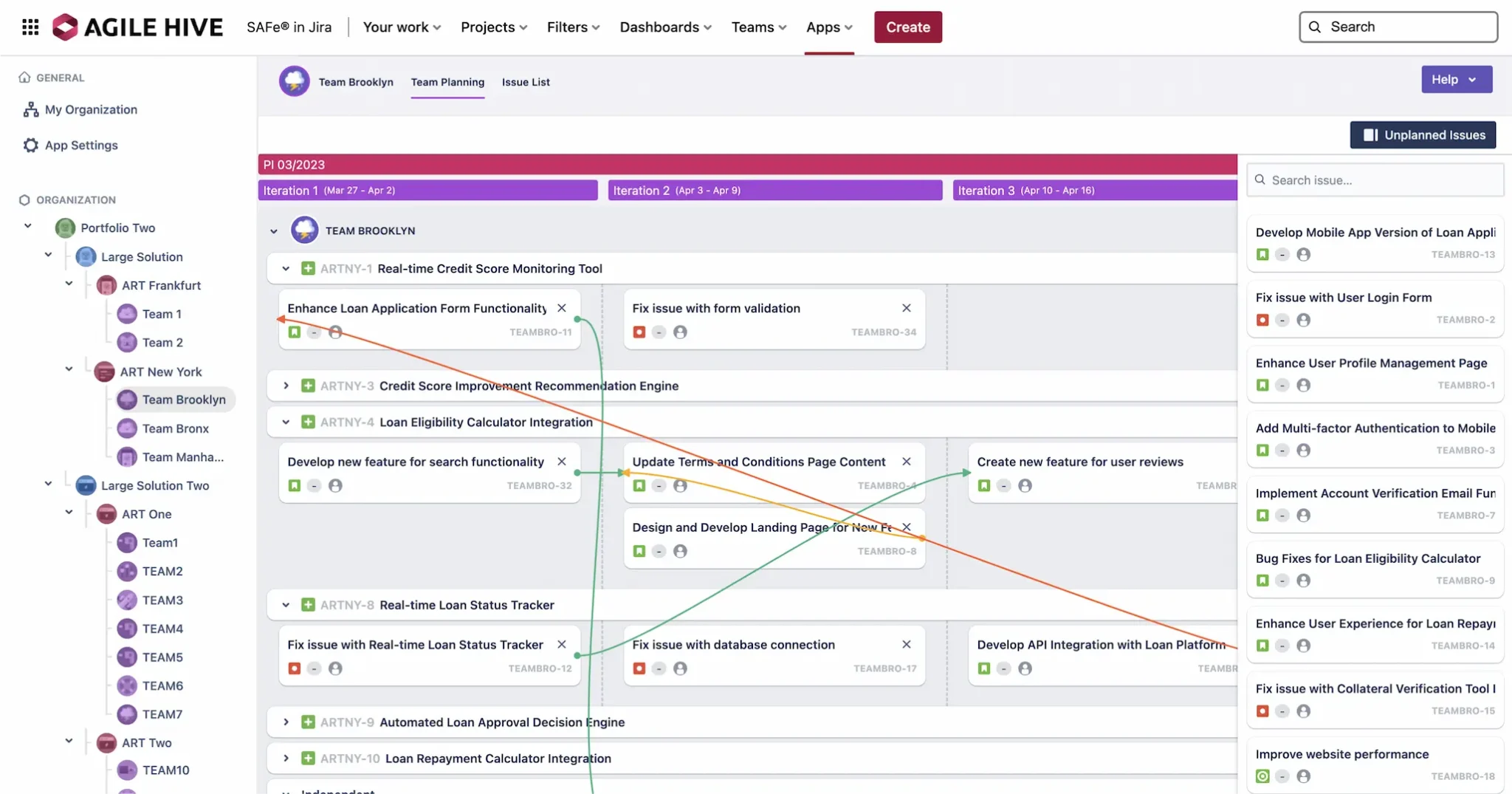
Enable your teams to plan their work with our collaborative Planning Board during your PIs. It simplifies the process of breaking down features into stories and identifying dependencies.
Agile Release Train (ART) / Program Level: Aligning Multiple Teams
The next level up is the Program level, centered around the Agile Release Train (ART). An ART is a team of Agile teams—usually 5 to 12 teams—aligned to a shared business and technical mission. The ART delivers value in Program Increments (PIs), typically spanning 8–12 weeks.
What Happens Here
- PI Planning
- Feature prioritization
- Dependency coordination
- System Demos
How Agile Hive Helps
Agile Hive enables seamless PI Planning with visibility across all team backlogs. It facilitates:
- Feature breakdown and assignment to teams
- PI Objectives tracking
- Visualization of dependencies and risks
Example: During a PI Planning session, a Release Train Engineer (RTE) can use Agile Hive’s visual boards to align all team plans, identify resource conflicts, and adjust priorities—all in one place. Teams can then execute their part of the plan without losing alignment.
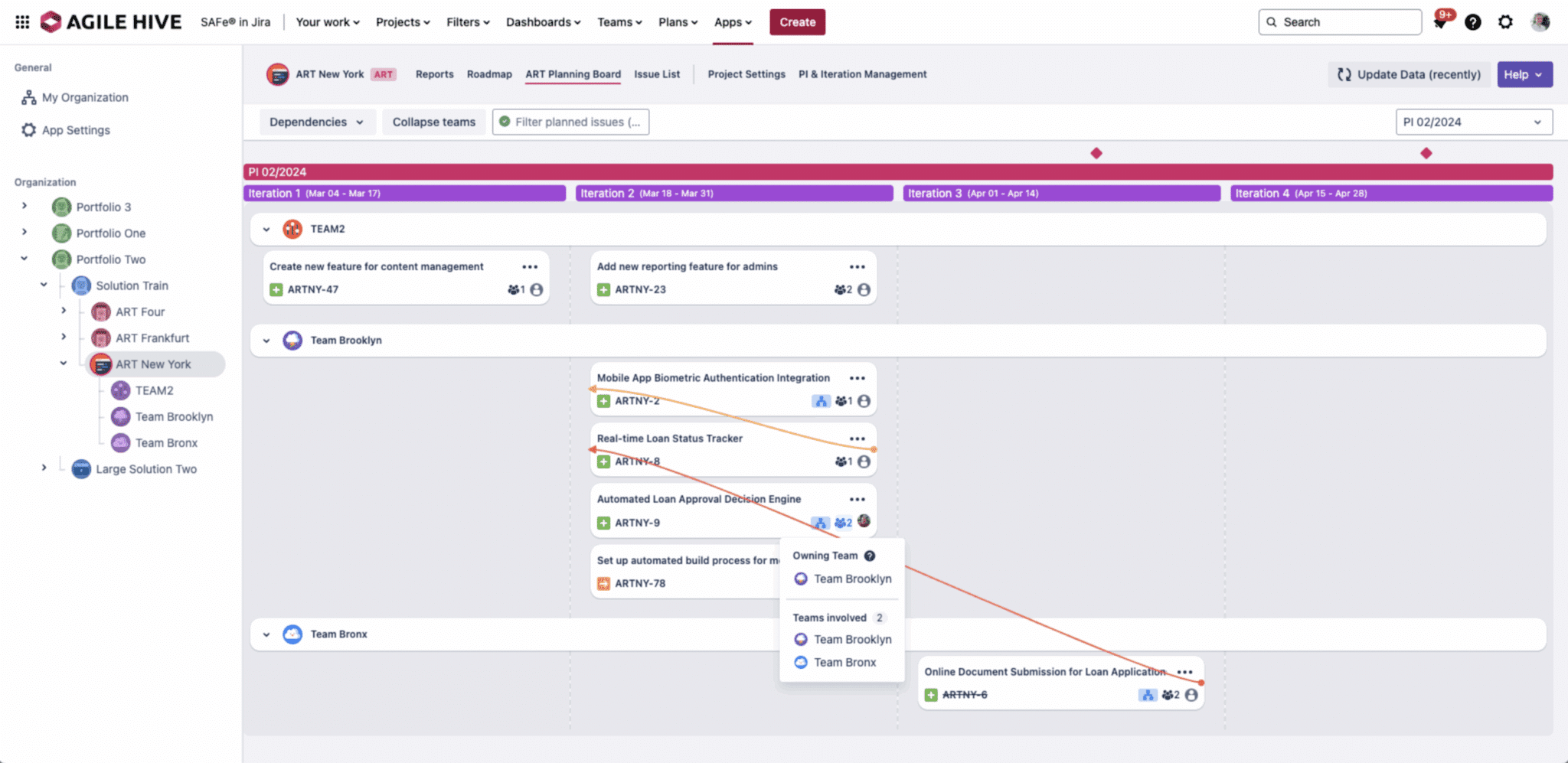
The ART Planning Board is a calculated view that shows the estimated completion time of ART features.
Large Solution Level: Managing Complex Systems
Not all organizations need this level, but it’s vital when building large, integrated systems—such as aerospace, automotive, or defense products—requiring multiple ARTs to collaborate.
What Happens Here
- Coordination across ARTs (Solution Trains)
- System architecture planning
- Compliance and integration activities
How Agile Hive Helps
Agile Hive offers tools for solution-level roles like Solution Train Engineers, Solution Architects, and Solution Management. It supports:
- Coordination of Capabilities (larger work items)
- Milestone tracking
- Integrated risk and compliance views
Example: In a manufacturing company developing an autonomous vehicle platform, Agile Hive helps coordinate across software, hardware, and testing ARTs—ensuring that dependencies are tracked and cross-team deliverables remain aligned to major release milestones.
Portfolio Level: Strategy Meets Execution
At the top of the SAFe® hierarchy is the Portfolio level, where strategy, funding, and governance come together. Here, leaders manage Epics and align them to Strategic Themes and Value Streams to ensure organizational goals are met.
What Happens Here
- Epic creation and analysis
- Lean budgeting
- Portfolio Kanban
- Strategic alignment
How Agile Hive Helps
Agile Hive gives Portfolio Managers and Epic Owners the ability to:
- Create and prioritize Epics
- Link Epics to downstream Features and Capabilities
- Visualize portfolio flow with built-in Kanban boards
- Align Epics with Strategic Themes and Value Streams
Example: A CIO reviewing investment in new digital services can use Agile Hive to track Epic progress, ensure funding is aligned to the right value streams, and visualize how strategy maps to execution across multiple ARTs.
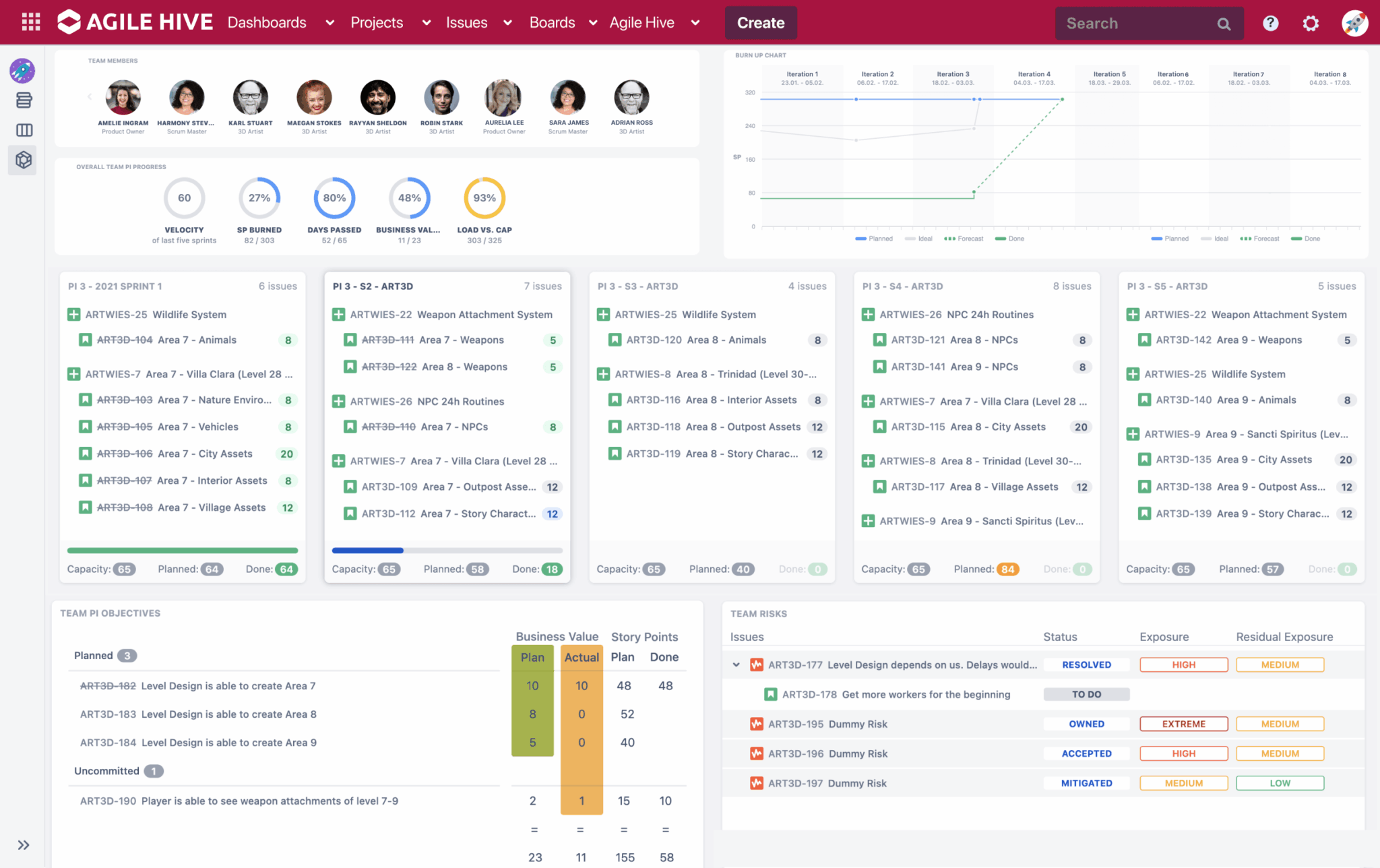
Whether you’re a Release Train Engineer, Product Owner, Program Manager, our automated reports give you the insights you need
Why Agile Hive is a Natural Fit for SAFe®
Agile Hive stands out because it’s fully integrated with Jira and Confluence, tools many organizations already use. It comes with built-in configurations aligned to SAFe® 6.0, meaning organizations can:
- Reduce setup complexity
- Ensure compliance with SAFe® roles and ceremonies
- Maintain end-to-end traceability from Epics down to team-level tasks
With Agile Hive, each SAFe® level is not just a theoretical model but an operational reality, supported by automation, transparency, and collaboration.
Some Final Thoughts
Whether you’re an Agile Team Member, Scrum Master, Release Train Engineer, or Portfolio Manager, understanding the four levels of SAFe® is key to driving scaled success. Agile Hive simplifies this journey by embedding SAFe® best practices directly into your existing workflows.
If your organization is starting—or struggling—with SAFe®, it might be time to let Agile Hive bring clarity and coordination to every level of your Agile enterprise. Schedule some time with us to learn more!
Related Reading
- Key SAFe® Roles Explained – And How Agile Hive Helps You Manage Them
- SAFe® Expert Sessions (YouTube)
- How Artificial Intelligence (AI) Is Transforming Scaled Agile
- Objectives and Key Results (OKRs) in the Scaled Agile Framework (SAFe®): A Guide to Strategic Alignment
- Understanding Flow Metrics in SAFe®: A Beginner’s Guide to Measuring and Improving Agile Performance